
A hot tub is meant to be your personal escape—a place where you can sink into warm, bubbling water and let the stress of the day melt away. But nothing ruins that relaxation faster than finding sand, soggy leaves, or even a stray bug floating in your spa.
If your hot tub is outdoors, you’ll inevitably deal with dirt and debris. Wind can carry in leaves and grass clippings, a pet or family member might track in sand, and tiny insects sometimes mistake your spa for a swimming pool. Even with a good cover, things slip in when the hot tub is in use.
The good news? You don’t need to drain and deep-clean your spa every time a leaf drops in. With the right tools, you can quickly deal with everyday messes and keep your water fresh between scheduled maintenance.
In this guide, we’ll explore three effective tools for removing dirt and debris from your hot tub. The first—and most important—is the spa vacuum, an essential piece of equipment every hot tub owner should consider.
1. Spa Vacuum – The Ultimate Hot Tub Cleaning Tool
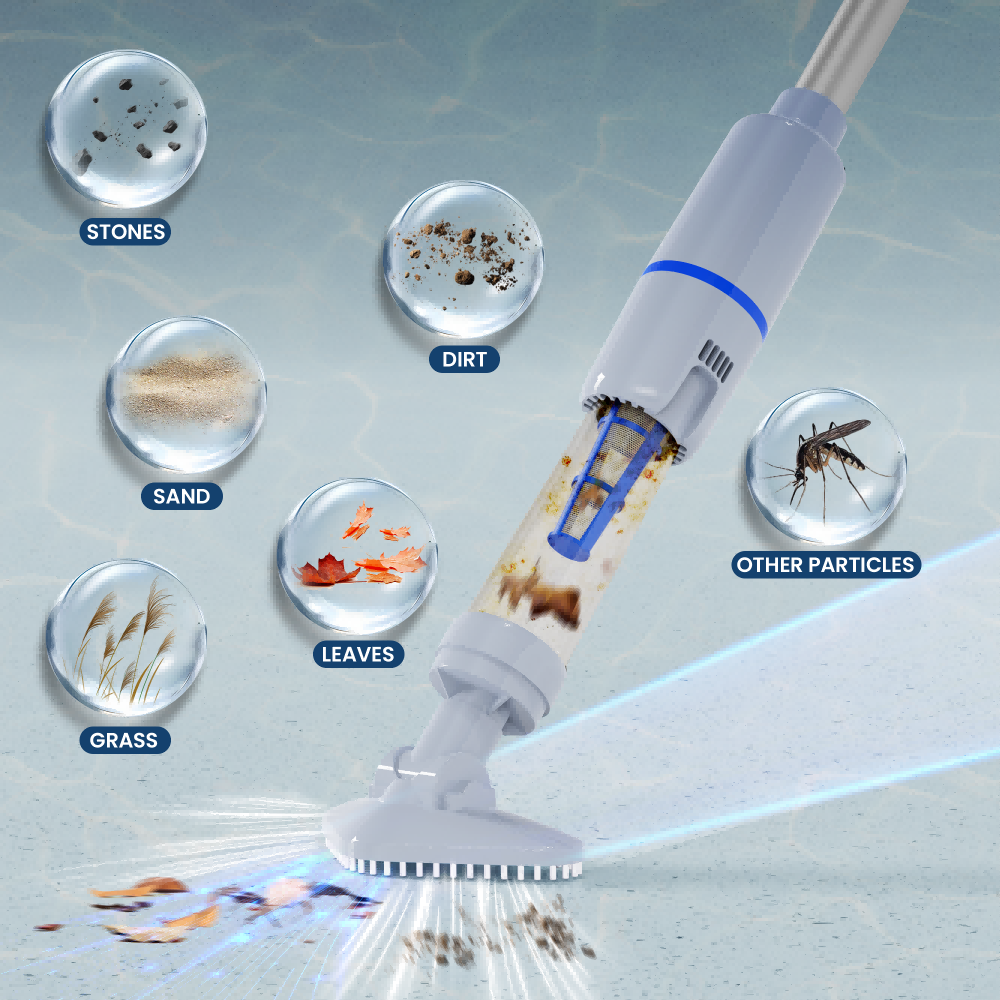
If you invest in just one tool for hot tub maintenance, make it a spa vacuum. Designed specifically for hot tubs and small pools, this tool makes quick work of debris that settles at the bottom of your spa. Unlike skimmers or nets, which can only collect floating particles, a spa vacuum reaches the problem areas below the surface.
Why a Spa Vacuum Is Essential
- Targets stubborn debris: Wet leaves, grains of sand, and other particles sink to the bottom of your spa. A vacuum easily removes them without disturbing the water.
- Saves time and effort: No more scooping around blindly or draining the entire tub just to clean up a few small messes.
- Keeps water clear: Removing debris before it breaks down helps maintain clean, healthy water.
- Versatile: Many spa vacuums can also be used in swimming pools, particularly for steps, tight corners, or around ladders where larger pool vacuums struggle.
Types of Spa Vacuums
There are three main categories of spa vacuums:
- Battery-operated spa vacuums
- Run on replaceable batteries.
- Portable and easy to use.
- Great for quick, light cleanings.
- Rechargeable spa vacuums
- Operate on built-in rechargeable batteries.
- More eco-friendly and cost-effective long-term.
- Often more powerful than disposable battery models.
- Manual spa vacuums
- Don’t require power or batteries.
- Use suction created by your movement or water pressure.
- Ideal for those who prefer a low-maintenance, eco-friendly solution.
Surprisingly, manual vacuums aren’t always the cheapest option, so it’s worth comparing prices and features before buying.
How to Use a Spa Vacuum
- Submerge the vacuum head into the water.
- Position it over the debris you want to remove.
- Activate suction (via battery, rechargeable motor, or manual pump).
- Collect debris into the attached filter or chamber.
- Empty and rinse the debris chamber after cleaning.
Pro Tip: Double Duty for Pool Owners
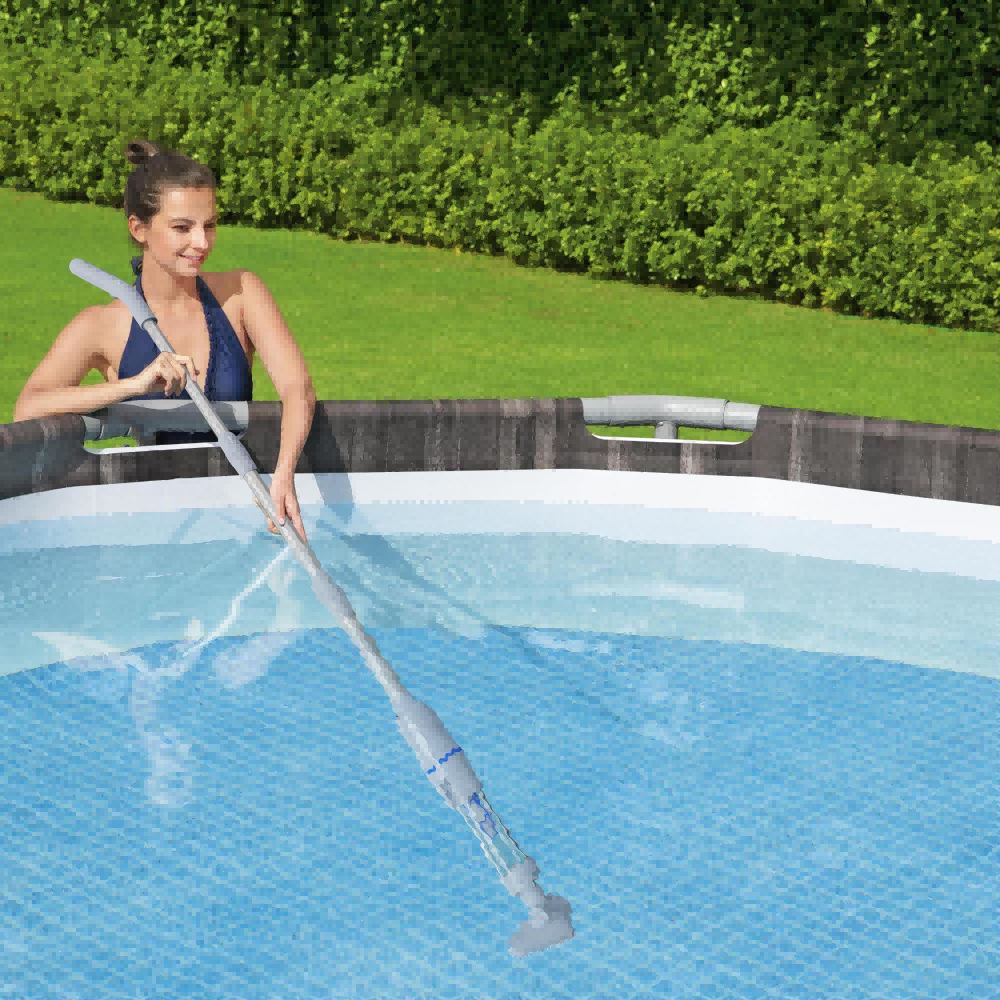
If you also own a swimming pool, your spa vacuum can help with spot-cleaning small areas. It’s especially useful for steps, shallow zones, or around tricky edges where a large pool vacuum won’t fit.
Bottom line: a spa vacuum is the single best investment you can make to keep your hot tub clean and enjoyable.
2. Turkey Baster – The Quick-Fix Tool
Sometimes the simplest household items make excellent spa cleaners. A turkey baster, for example, is perfect for removing small amounts of debris like a few pebbles, grains of sand, or an insect that wandered into the water.
How It Works
The turkey baster acts like a mini suction pump:
- Squeeze the bulb to release the air.
- Submerge the tip in the water and position it over the debris.
- Release the bulb to suck up water and capture the debris.
- Carefully lift the baster out of the water without squeezing again.
It’s quick, cheap, and surprisingly effective for tiny messes.
Limitations
Of course, this method isn’t practical for cleaning a whole hot tub. If the bottom of your spa is covered in leaves or sand, you’ll be squeezing that bulb all day. But for spot-cleaning, a turkey baster can save you from a bigger chore later on.
👉 Important: Once a turkey baster has been used for hot tub cleaning, don’t return it to the kitchen. Keep it with your spa supplies.
3. DIY Siphon – A Handy Backup Trick
For the DIY enthusiast, a homemade siphon can serve as a makeshift spa vacuum. While it won’t replace a real spa vacuum in terms of power or convenience, it’s a clever emergency solution when you don’t have any tools on hand.
What You’ll Need
- A short piece of rigid but flexible hose
- A plastic bucket
Steps to Make It Work
- Fill one end of the hose with water from a tap.
- Place the other end into your hot tub, positioning it above the debris.
- Cover the water-filled end with your thumb.
- Invert it into the bucket and release your thumb.
- Suction is created, pulling debris into the hose and out into the bucket.
The Drawback
This method only produces a few seconds of suction at a time. You’ll need to reset it often, so it’s best for very small cleanups. Still, when you’re in a bind, it’s a practical trick that gets the job done.
Prevention Is Just as Important
Cleaning tools are handy, but prevention reduces how much cleaning you’ll need in the first place. A few habits can go a long way toward keeping your hot tub debris-free:
- Cover it up: Always replace your hot tub cover when not in use.
- Mind the weather: Avoid using the spa on windy days, or set up a temporary barrier to block leaves and debris.
- Rinse before soaking: Encourage bathers to rinse feet and swimsuits before entering.
- Maintain your surroundings: Trim nearby plants, sweep decks and patios, and keep the area around your hot tub tidy.
Quick Fixes vs. Regular Maintenance
Tools like spa vacuums, turkey basters, and siphons are great for quick cleanups, but they’re not substitutes for regular hot tub care. To keep your water safe and inviting, you’ll still need to:
- Drain and refill the hot tub every few months.
- Clean and rinse the filters regularly.
- Wipe down the shell and cover to prevent buildup.
- Test and balance the water chemistry to maintain proper sanitation.
Think of these tools as your “in-between helpers” that make life easier between scheduled maintenance.
Final Thoughts
Owning a hot tub should be about relaxation—not frustration. While sand, leaves, and other debris are inevitable, they don’t need to ruin your spa time.
With just three tools—a spa vacuum, a turkey baster, and a DIY siphon—you can easily manage day-to-day debris. Among them, the spa vacuum stands out as the most essential, offering the power, precision, and convenience to keep your hot tub clear and enjoyable.
Combine these quick-clean strategies with regular maintenance and prevention habits, and your hot tub will remain the peaceful retreat you intended it to be.
So the next time you spot a leaf at the bottom of your spa, don’t stress—you’ve got the right tools and know-how to handle it.




 English
  French
  Italian
  German
  Spanish
  Polish
  Danish
  Indonesian
  Swedish
  Russian
  Turkish
  Portuguese