
Robotic pool cleaners are among the most useful tools modern pool owners can invest in. They take the back-breaking work out of scrubbing, vacuuming, and clearing debris, while also improving water clarity and reducing stress on your filtration system. But with so many models available—from budget-friendly units to high-end robots with advanced smart features—it can be overwhelming to know which one is right for your pool.
This guide breaks down everything you need to know when shopping for a robotic pool cleaner. We’ll cover essential considerations such as pool type and size, corded versus cordless models, cleaning methods, power options, and even smart connectivity. By the end, you’ll have a clear understanding of what to look for and how to choose the cleaner that best fits your needs.
.jpg)
1. Start with Your Pool Type and Size
The first step in selecting the right robotic pool cleaner is to consider your pool’s design and size. Not all cleaners are designed for every pool type, so matching your cleaner to your pool will ensure efficiency and protect your surfaces.
- In-ground vs. above-ground: Some cleaners are versatile enough to work in both, while others are designed specifically for one. For example, lightweight models are gentler on vinyl liners commonly found in above-ground pools, while larger in-ground pool robots may offer stronger suction and wall-climbing ability.
- Pool shape and features: Pools with complex features like sun shelves, built-in seating, or sloped coves require cleaners with advanced navigation systems to handle tricky surfaces.
- Pool size: Larger pools demand longer cleaning cycles or more powerful motors. A compact pool can be serviced by a simple one-hour cycle, but a sprawling in-ground pool may require a cleaner that runs for four or more hours.
Pro Tip: Always check the manufacturer’s recommended maximum pool size for a cleaner. Choosing a model designed for smaller pools in a large pool will lead to frustration and incomplete cleaning.
2. Corded vs. Cordless Models
One of the most common questions pool owners face is whether to choose a corded or cordless robotic pool cleaner. Both come with advantages and trade-offs:
- Corded Cleaners:
- Pros: Unlimited run time, consistent performance, often lower cost.
- Cons: Limited by cord length, risk of tangling, and reliance on nearby power outlets.
- Cordless Cleaners:
- Pros: Easier to handle, no cord tangling, more freedom in pool placement.
- Cons: Limited battery life, generally higher cost due to advanced batteries.
If you have a large pool and frequent cleaning needs, corded cleaners may be more practical. However, for smaller or medium-sized pools, cordless units provide unmatched convenience.
3. Cleaning Methods and Coverage
Not all robotic pool cleaners provide the same level of cleaning. Basic models may only vacuum the pool floor, while premium robots can scrub, climb walls, clean the waterline, and even skim floating debris.
Here are the most common cleaning functions:
- Floor-only models: Best for smaller or above-ground pools without complex shapes.
- Wall-climbing cleaners: Use suction and jets to scale vertical surfaces, reducing the need for manual scrubbing.
- Waterline cleaning: Some advanced models clean horizontally along the waterline, tackling stubborn limescale and buildup.
- Surface skimming: A few models are designed to remove leaves, pollen, and floating debris that built-in skimmers might miss.
When choosing, consider how much manual cleaning you’re willing to do. If you dislike brushing walls or scrubbing waterlines, a model with vertical and waterline cleaning will be worth the investment.
4. Power Options: Plug-In, Battery, and Solar
How your robotic pool cleaner is powered directly affects both convenience and performance.
- Plug-In Corded Cleaners: Dependable and cost-effective. Ideal for long sessions but require access to power and proper cord management.
- Battery-Powered Cleaners: Offer cordless convenience. Battery life ranges from 1–9 hours depending on the model. Great for hassle-free operation.
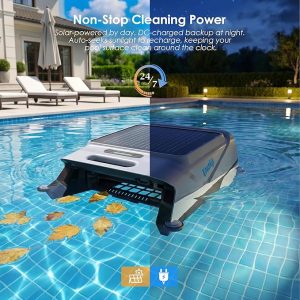
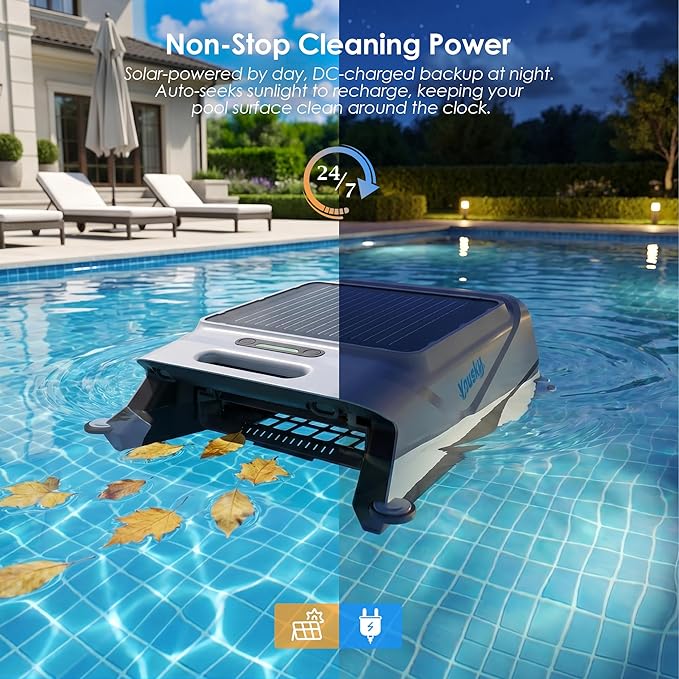
- Solar-Assisted Cleaners: Combine battery power with solar panels to extend operation time. These are often found in surface skimmers that can run continuously when exposed to sunlight.
If your pool is shaded or very large, plug-in or high-capacity battery-powered units are more reliable. For sunny climates and surface cleaning, solar-assisted models are both energy-efficient and low-maintenance.
5. Smart Connectivity and Controls
Smart features are becoming increasingly popular, making robotic pool cleaners easier and more customizable.
- App Control: Many modern robots connect to Wi-Fi or Bluetooth, allowing you to schedule cleanings, monitor progress, or steer the robot manually from your phone.
- Remote Steering: Useful for targeting areas that the robot may miss in automatic mode.
- Automation: Features like programmable schedules, delayed starts, and integration with pool monitoring apps can save you time and ensure consistent cleaning.
While not essential, smart connectivity is particularly beneficial for busy households or large pools that need frequent cleaning.
6. Extra Features to Consider
Some robotic pool cleaners go beyond the basics and offer unique features to improve water clarity and reduce manual work.
- Clarifying Agents: Certain models can dispense biodegradable water clarifiers that bind tiny particles, oils, and pollen together, making them easier to filter out.
- Multi-Mode Cleaning Cycles: Options like quick-clean, eco-mode, or deep clean allow you to tailor operation to your pool’s condition.
- Navigation Technology: Advanced mapping systems help avoid missed spots and improve efficiency in irregularly shaped pools.
7. Maintenance and Longevity
Even the best robotic pool cleaner requires proper care to maximize lifespan. On average, these machines last 3–5 years, though many owners report up to 7 years with good maintenance.
- Always remove from pool when not in use: Prolongs motor life and prevents chlorine damage.
- Rinse after use: Keeps debris, chemicals, and calcium deposits from building up.
- Check and clean filters regularly: Ensures suction remains strong.
- Replace worn parts: Tracks, brushes, and filter baskets are usually inexpensive and easy to swap out.
Following these practices will extend the life of your investment significantly.
8. Cost Expectations
Robotic pool cleaners are an investment, but one that can save you time and improve your pool experience. Prices generally fall into these categories:
- Budget ($200–$500): Basic, floor-only models. Suitable for small above-ground pools.
- Mid-Range ($500–$1,000): Add wall climbing, larger filters, and better suction.
- Premium ($1,000–$2,000+): Advanced navigation, app control, waterline cleaning, and long battery life.
Keep in mind that features such as cordless operation, Wi-Fi connectivity, and surface skimming often push models into the premium range.
9. Frequently Asked Questions (FAQ)
How do robotic pool cleaners work?
They operate independently from your pool’s filtration system. Using onboard motors, suction, and filters, they travel along the pool floor and walls, collecting dirt, leaves, and debris.
How long do they last?
On average, 3–5 years, with potential for 7+ years if maintained properly.
Can you leave them in the pool?
It’s tempting, but not recommended for long periods. Extended exposure to chlorine can damage parts. Always remove during chemical treatments.
Are they worth the cost?
For many pool owners, yes. They reduce manual work, improve water clarity, and help extend the life of your filtration system.
Conclusion: Choosing the Best Robot for Your Pool
The right robotic pool cleaner is one that matches your pool type, size, and personal preferences. Whether you prefer a plug-in model that runs for hours or a high-tech cordless cleaner with smart controls, the key is to balance features with your actual needs.
If your pool is large and complex, look for a robot with long cycles, wall-climbing ability, and smart navigation. For smaller or above-ground pools, a budget-friendly unit may be more than sufficient. And for those who value convenience, app connectivity and cordless designs are worth the premium.
By carefully considering these factors, you’ll be able to find a robotic pool cleaner that keeps your pool sparkling, saves you time, and enhances your swimming experience for years to come.
-300x300.jpg)

 English
  French
  Italian
  German
  Spanish
  Polish
  Danish
  Indonesian
  Swedish
  Russian
  Turkish
  Portuguese