
Why Water Resources Matter Globally
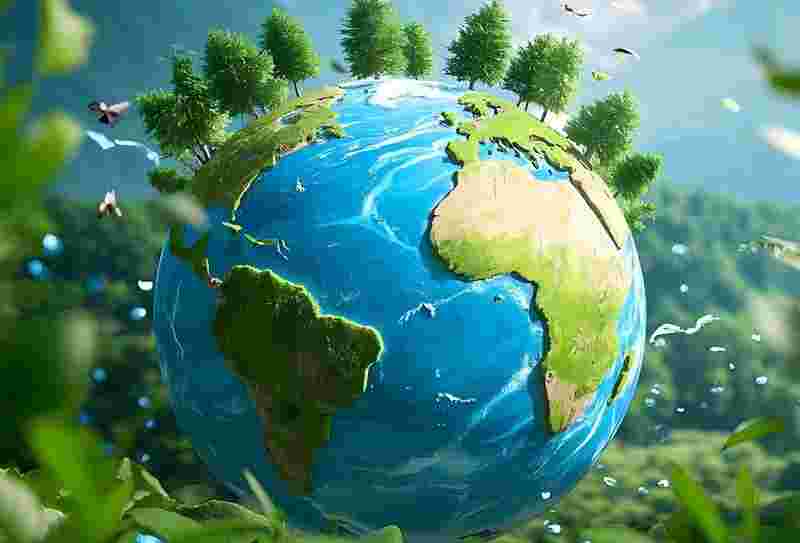
Water is one of the most essential natural resources on Earth, supporting every aspect of human life—from agriculture and industry to household needs and ecosystems. However, water is not evenly distributed around the world. While some countries are rich in freshwater resources, others face chronic shortages and high water costs.
Understanding how global water resources are distributed and why certain regions pay more for water helps us see the challenges of sustainability, climate change, and economic inequality more clearly.

How Global Water Resources Are Distributed
The Earth’s total water volume is vast, but only about 2.5% is freshwater suitable for human use. Even within this small portion, most freshwater is locked in glaciers or underground aquifers.
(1) Countries Rich in Water Resources
Some nations are naturally blessed with abundant rainfall, large river systems, and freshwater lakes.
- Brazil – Holds nearly 12% of the world’s renewable freshwater, largely due to the Amazon River basin.
- Russia – Contains around 10% of global freshwater resources, with major rivers like the Volga, Lena, and Ob.
- Canada – Known for its lakes and glaciers, Canada has roughly 7% of the world’s freshwater.
- United States – Despite regional imbalances, the U.S. ranks among the top five countries for total freshwater volume.
- China and Indonesia – Both have significant freshwater reserves, though distribution across regions is uneven.
These countries often have strong hydropower potential, agricultural irrigation capacity, and lower overall water stress.
(2) Water-Scarce Regions
In contrast, many countries struggle with limited water availability due to arid climates, high population density, or inefficient water management.
- Middle East and North Africa (MENA) – Nations such as Saudi Arabia, the UAE, and Kuwait depend heavily on desalination because of minimal rainfall and groundwater depletion.
- Sub-Saharan Africa – Despite having large river systems, uneven rainfall and poor infrastructure lead to severe water shortages.
- South Asia – India and Pakistan face seasonal water stress caused by population growth and over-extraction from rivers like the Ganges and Indus.
- Australia – The world’s driest inhabited continent often experiences drought cycles that impact agriculture and cities alike.
Why Water Prices Vary Around the World
The cost of water depends on both natural availability e economic factors such as infrastructure, technology, and government policy.
(1) High Water Prices in Arid and Urban Regions
In places where natural freshwater is scarce, water must be imported, desalinated, or treated extensively—processes that are costly.
- Singapore: Lacking natural freshwater, Singapore invests heavily in desalination and water recycling technologies. The cost per cubic meter is among the highest in Asia.
- United Arab Emirates & Qatar: These countries rely almost entirely on desalination, making their per-liter water cost several times higher than in water-rich nations.
- Australia: During drought years, water prices can surge due to restrictions and rising treatment expenses.
- European Cities (e.g., Copenhagen, London): High-quality water treatment systems and strict environmental regulations make urban water relatively expensive.
(2) Low Water Prices in Resource-Rich Areas
In contrast, countries with abundant freshwater—like Canada, Russia, and Brazil—enjoy much lower water prices. Abundant supply, renewable rainfall, and natural reservoirs keep production and distribution costs minimal.
However, low water prices sometimes lead to overuse or waste, highlighting the need for sustainable pricing even in water-rich nations.
The Link Between Water Scarcity and Economic Development
Water scarcity is not only an environmental issue but also an economic one. Regions that spend more on water often face higher production costs in agriculture, energy, and manufacturing. This can reduce competitiveness and increase living expenses.
Conversely, countries with stable and affordable water supplies have a strong advantage in industries such as food production, textiles, and hydropower generation. This is why many global businesses are investing in water efficiency, recycling, e smart irrigation technologies to balance growth and sustainability.
Global Efforts to Address Water Inequality
The United Nations and various international organizations have set goals to ensure “clean water and sanitation for all” under the Sustainable Development Goals (SDG 6). Efforts include:
- Promoting water recycling and desalination innovation.
- Supporting cross-border water management agreements.
- Encouraging responsible water use in agriculture and industry.
- Investing in infrastructure to reduce water loss and contamination.
Technology is also playing a growing role—smart water meters, efficient filtration systems, and eco-friendly pool products all contribute to saving this vital resource.
Conclusione
Water is a shared global asset, but its distribution and cost remain deeply unequal. Countries like Brazil, Russia, and Canada hold the majority of the world’s freshwater, while regions in the Middle East, Africa, and parts of Asia face extreme scarcity and rising costs.
As climate change intensifies and populations grow, the challenge of managing water fairly and efficiently will only increase. Whether through innovation, conservation, or collaboration, the future of global water security depends on how wisely we value every drop today.





 Italian
  English
  French
  German
  Spanish
  Polish
  Danish
  Indonesian
  Swedish
  Russian
  Turkish
  Portuguese