
Owning a backyard pool is a luxury that comes with a key responsibility: maintaining crystal-clear, safe, and comfortable water. The cornerstone of effective pool maintenance isn’t just skimming leaves or running the filter; it’s regular and accurate water testing. Understanding your pool’s chemical balance is the difference between a sparkling oasis and a problematic, potentially unsafe swimming environment.
This guide will walk you through the why, what, and how of home pool water testing, empowering you to take control of your pool’s health.
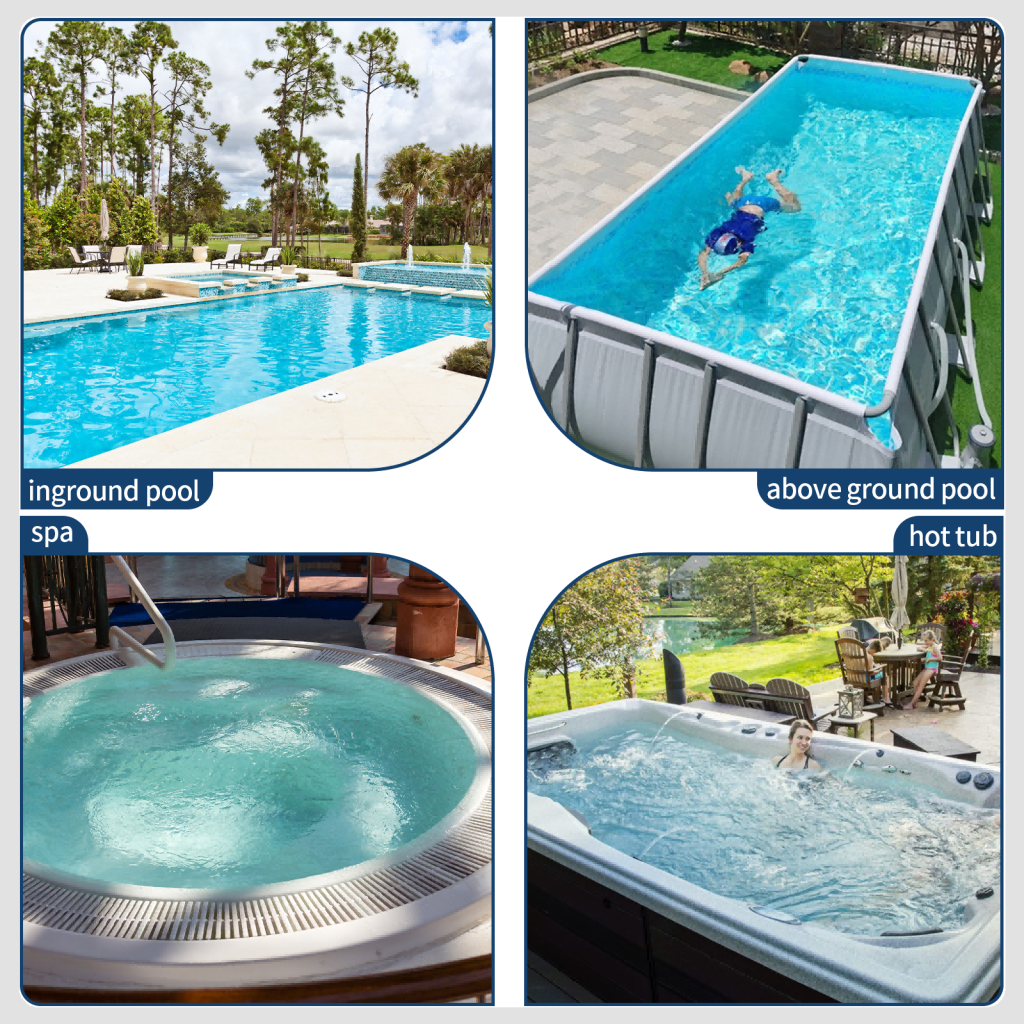
Why Testing is Non-Negotiable
Simply put, you cannot manage what you do not measure. Clear water is not always clean water. Improper chemical levels can lead to a host of issues:
- Health Risks: Low sanitizer levels allow harmful bacteria and algae to thrive, causing skin, ear, and eye infections.
- Comfort Problems: Incorrect pH causes eye sting, skin irritation, and can make your sanitizer less effective.
- Damage to Equipment: Water that’s too acidic (low pH) or too scale-forming (high calcium) can corrode metal parts, degrade liners, and clog filters and heaters, leading to costly repairs.
- Cloudy Water and Algae: Imbalanced water is the primary cause of cloudy water and stubborn algae blooms, turning maintenance into a constant battle.
Your Testing Toolkit: Methods Explained
You have several reliable options for testing your pool water at home:
- Test Strips: The fastest and easiest method. Simply dip a strip into the water, wait briefly, and compare the colored pads to a provided chart. They typically test for key parameters like chlorine, pH, and alkalinity. For best accuracy, ensure strips are fresh and stored in a dry, sealed container.
- Liquid Test Kits (DPD & Phenol Red): Considered the gold standard for accuracy by many pool professionals. These kits use vials of pool water and reagent drops. You add a specific number of drops to the vial, and the resulting color indicates the level. While slightly more involved than strips, they offer superior precision, especially for measuring free chlorine and bromine.
- Digital Testers: These devices offer a high-tech approach. Some use photometers that “read” the color change from a test strip or reagent with electronic precision, eliminating guesswork. Others are electronic probes for specific measurements like pH. They are highly accurate but come at a higher initial cost.
Pro Tip: Regardless of your chosen method, always follow the manufacturer’s instructions precisely for sampling and timing to ensure valid results.
Key Parameters to Monitor & What They Mean
Focus on these essential levels for a healthy pool:
- Free Chlorine (Sanitizer): The active chlorine that kills contaminants. Ideal Range: 1-3 ppm. Below this range, your pool is unsanitized; too high can cause irritation.
- pH Level (Acidity/Basicity): Measures how acidic or basic your water is. Ideal Range: 7.4-7.6. This narrow range is crucial for swimmer comfort, sanitizer effectiveness, and equipment protection.
- Total Alkalinity (pH Buffer): Acts as a shock absorber for pH, preventing rapid swings. Ideal Range: 80-120 ppm. Correct alkalinity makes pH much easier to control.
- Stabilizer (Cyanuric Acid): Protects chlorine from being rapidly destroyed by sunlight. Ideal Range: 30-50 ppm. Too low, and you’ll lose chlorine quickly; too high, it “locks” the chlorine, making it ineffective.
- Twardość wapniowa: The amount of dissolved calcium in the water. Ideal Range: 200-400 ppm. Prevents water from becoming corrosive (too low) or scale-forming (too high).
A Simple Testing Routine
- Frequency: Test for Free Chlorine and pH at least 2-3 times per week. Test for Total Alkalinity, Stabilizer, and Calcium Hardness once a week. Always test after heavy use, a rainstorm, or if you’re adding significant fresh water.
- How to Sample: Use a clean container. Collect water from about elbow-deep (18 inches), away from return jets. This gives a sample representation of the entire pool, not just the surface.
Taking Action: What to Do With Your Results
Testing is only the first step. The goal is to adjust.
- Adjust Total Alkalinity first, as it influences pH stability.
- Then, adjust pH to its ideal range.
- Finally, adjust your sanitizer (Chlorine) level.
- Manage Stabilizer and Calcium Hardness as needed, typically less frequently.
Always add chemicals separately, circulate the water well after each addition, and follow all product safety guidelines.
The Path to a Perfect Pool
Consistent water testing is the single most important habit for any pool owner. It transforms maintenance from a reactive chore into a simple, proactive routine. By investing just a few minutes each week with a reliable test kit, you ensure your pool remains a safe, comfortable, and brilliantly clear retreat for you, your family, and friends all season long.




 Polish
  English
  French
  Italian
  German
  Spanish
  Danish
  Indonesian
  Swedish
  Russian
  Turkish
  Portuguese