
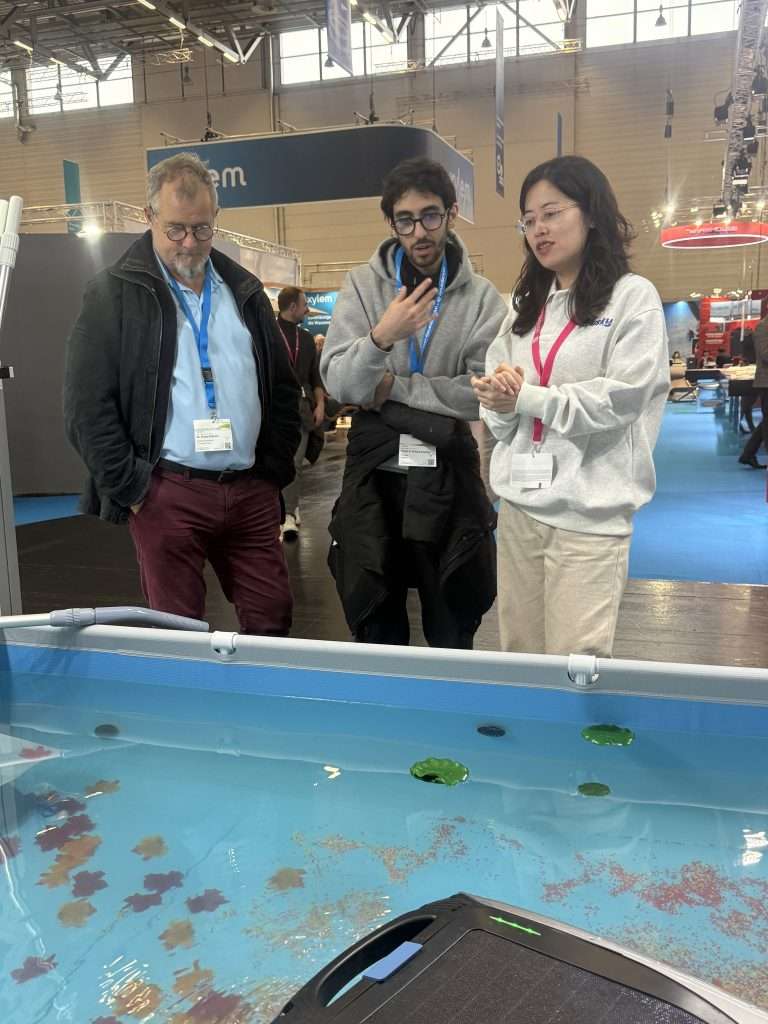
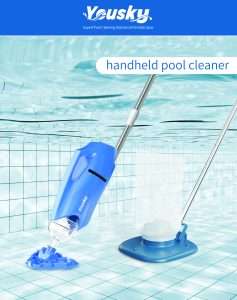
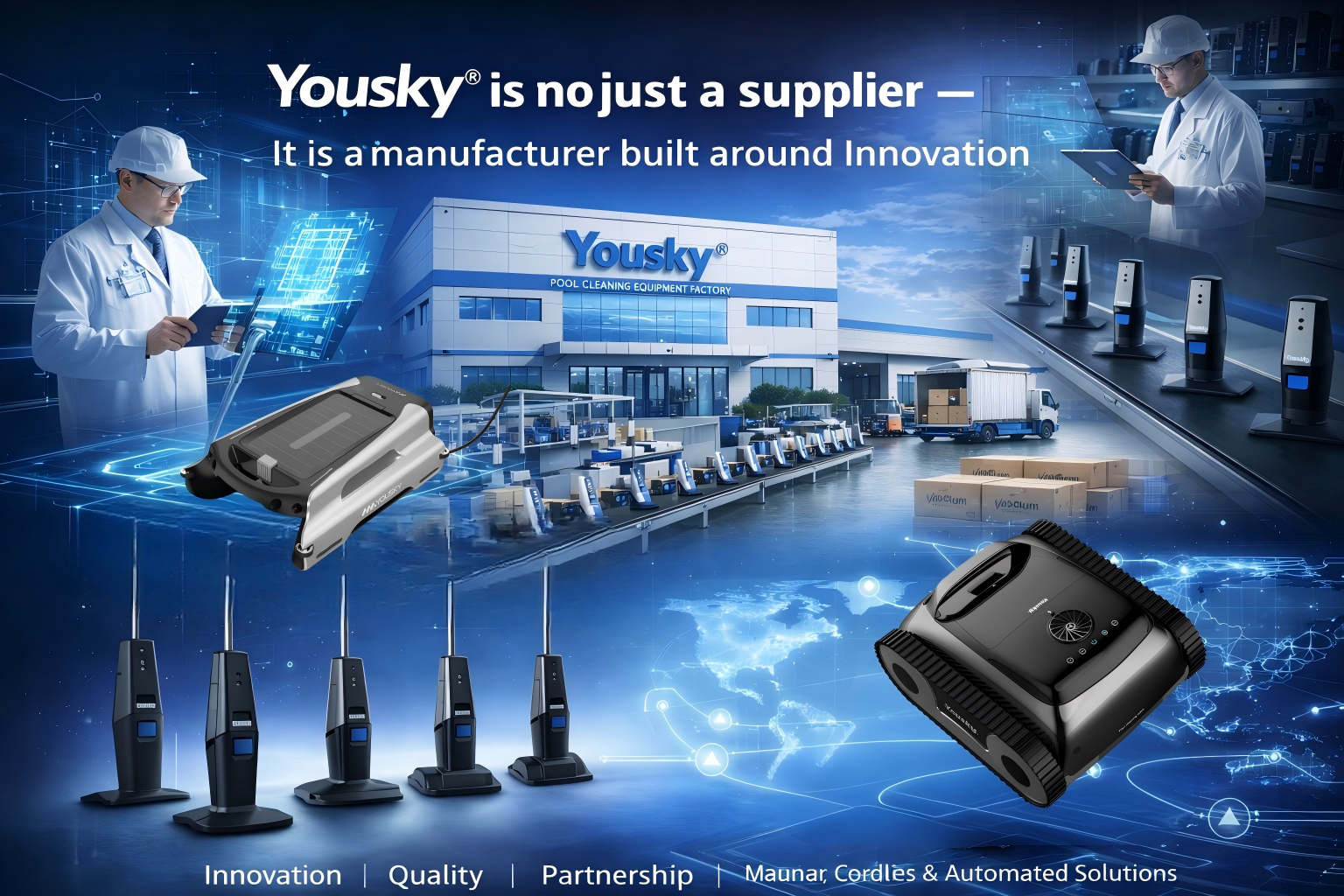
In recent years, some pool cleaner Chinese brands such as Yousky Technology has emerged in the international market. With its comprehensive product portfolio and strong R&D capabilities, Yousky Technology’s products are exported to 60 countries and regions in North America, Europe, Asia, and Oceania. Through technological innovation and precise market positioning, it has occupied a high share in the wireless pool robot market, and its products are deeply popular among consumers on platforms such as Amazon. The rise of the Chinese brands has not only enriched the competitive landscape of the international pool cleaner market but also injected new vitality into the development of the industry.
Product Types and Technical Features
(I) Product Types
The international pool cleaner market has a wide variety of product types, and each type of product has its unique advantages and applicable scenarios. In terms of connection methods, cabled robots are connected to the power supply through cables. Such cleaners usually have strong power and can work continuously for a long time, which is suitable for large commercial pools or scenarios that require long cleaning time. However, limited by the length and position of the cable, their range of activities is relatively restricted. Special attention should be paid to the placement of the cable during use to avoid tangling and damage. Cordless robots are powered by built-in batteries, which get rid of the constraints of cables and have greater flexibility. They can move freely and are easy to use and store. They are especially suitable for private residential pools. Users can easily place them anywhere in the pool to start cleaning, and they are more convenient to store after use.
In terms of driving methods, track-driven robots move using tracks and perform well in providing better traction and stability. They are especially suitable for pools with uneven bottom or wall surfaces, and can move stably on complex terrain to ensure the smooth progress of cleaning work. Wheel-driven robots move by wheels, which are fast and can quickly cover large areas. Therefore, they can efficiently complete cleaning tasks in large pools and greatly shorten the cleaning time. In addition, there are some innovative design products on the market that combine the characteristics of track and wheel drive, or adopt other unique technologies to improve performance. They provide consumers with more diversified choices and meet different pool environments and user needs.
(II) Technical Features
Market Drivers
Modern pool cleaners are constantly innovating in technology and showing many advanced features. Autonomous navigation technology is one of the keys. Many high-end pool cleaners use advanced sensors and intelligent algorithms to independently plan cleaning paths, achieve full coverage of the pool, and avoid cleaning dead ends. Intelligent obstacle avoidance technology has also been widely used. During operation, the cleaner can perceive the surrounding environment in real time, and can adjust the direction in time when encountering obstacles, effectively avoiding collisions, ensuring the safe operation of the equipment, and reducing the risk of damage to pool facilities.
Remote control technology has brought great convenience to users. Through a mobile app or intelligent voice assistant, users can start and pause the cleaner away from the pool, and also set parameters such as cleaning time and area. For example, users can start the pool cleaner in advance on the way home from work and enjoy a clean pool when they get home. Energy-saving design is also an important trend in the industry. More and more pool cleaners adopt high-efficiency and energy-saving motors and intelligent control systems, which reduce energy consumption while ensuring cleaning effects, conform to the concept of environmental protection, and save users’ use costs. Some cleaners are also made of environmentally friendly materials to reduce potential harm to the environment, implement the concept of environmental protection throughout the entire product life cycle, and promote the development of the entire industry in a green and sustainable direction.
(I) Growth in the Number of Pools
With the improvement of people’s living standards and the pursuit of high-quality leisure life, the number of pools in households and commercial places is constantly increasing. In the household scenario, more and more people regard private pools as important facilities to improve the comfort and enjoyment of life. Especially in regions such as Europe and the United States, the proportion of single-family houses equipped with pools is quite considerable. In the commercial field, hotels and resorts will continuously improve their pool facilities to attract more guests, and the number of public swimming pools is also increasing with the national fitness upsurge. The increase in the number of pools has directly driven the demand for pool cleaners. After all, maintaining clean pool water is the key to ensuring the health and comfortable experience of swimmers, which provides a broad development space for the pool cleaner market.
(II) Technological Progress and Innovation
(III) Demand for Time Saving
The rapid development of robotics and artificial intelligence has brought a qualitative leap to pool cleaners. Today’s pool cleaners have achieved autonomous navigation with the help of advanced sensors and intelligent algorithms, which can automatically plan the optimal cleaning path according to the shape and size of the pool, avoiding repeated cleaning and cleaning dead ends. The intelligent obstacle avoidance function also allows the cleaner to move flexibly in complex pool environments and reduce the risk of collision damage. Remote control technology has greatly improved the user experience. Through a mobile app, users can start and pause the cleaner anytime and anywhere, and also set the cleaning time and area. These technological innovations not only improve cleaning efficiency but also make pool cleaning more convenient and intelligent, meeting consumers’ pursuit of high-tech products and attracting more people to choose to buy pool cleaners.
The pace of life in modern society is accelerating day by day, and people’s time has become more fragmented, making it difficult to spend a lot of time on tedious pool cleaning work. The automatic cleaning function of pool cleaners just solves this pain point. It can automatically complete the pool cleaning task within the set time without continuous manual operation. Users only need to press a button easily or make simple settings on their mobile phones to let the cleaner do the work, and they can free up more time to accompany their families and enjoy leisure time. This efficient and convenient cleaning method is very attractive to busy modern people and has become one of the important factors driving the development of the pool cleaner market.
(IV) Increased Environmental Awareness
(V) Improved Cleaning Efficiency and Performance
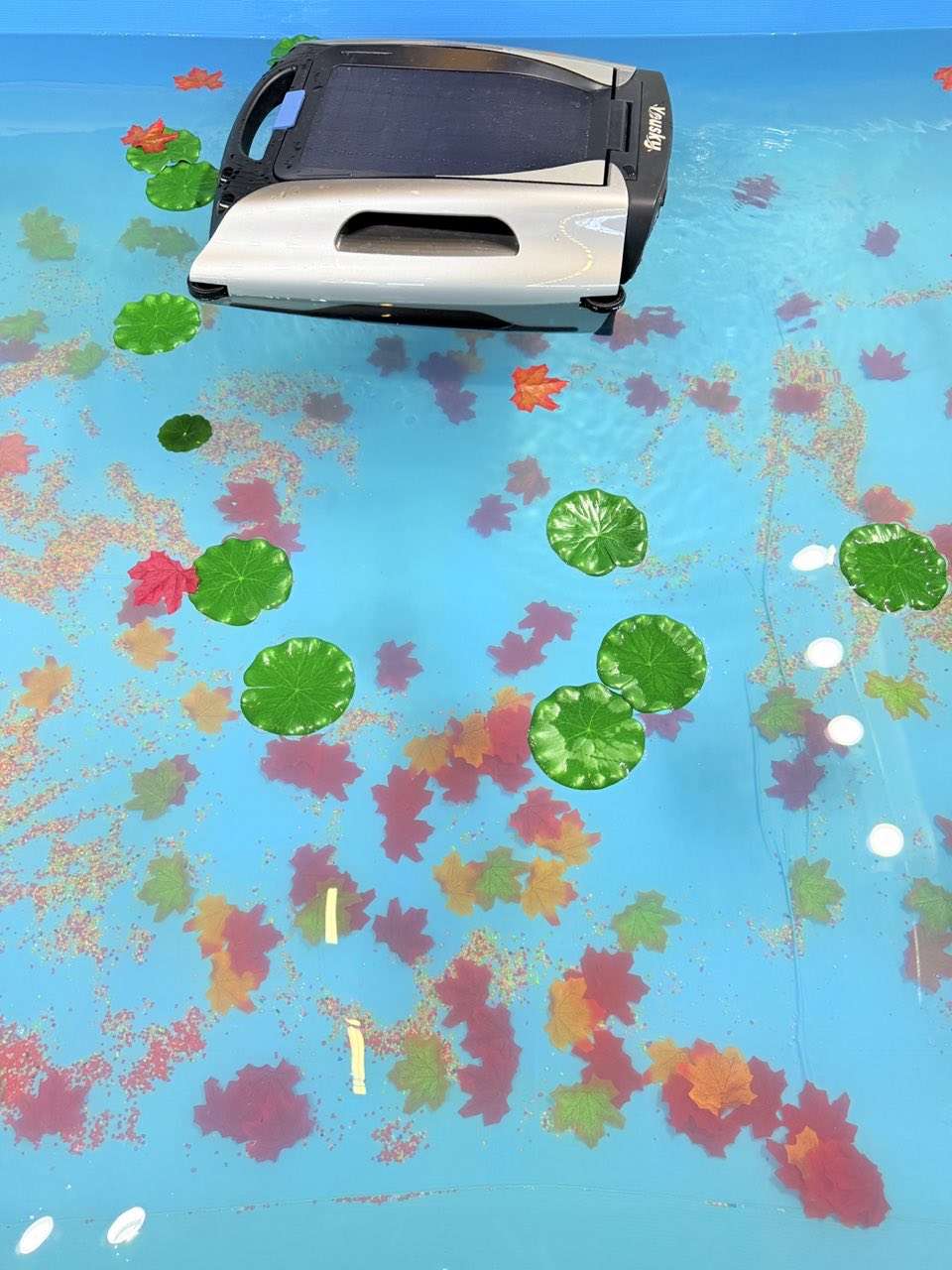
Compared with traditional manual cleaning methods, pool cleaners have significant advantages in cleaning efficiency and performance. Traditional cleaning methods often require manual tools to clean every corner of the pool one by one, which is not only time-consuming and labor-intensive but also the cleaning effect is greatly affected by human factors, making it difficult to ensure thorough cleaning. Pool cleaners, on the other hand, can quickly and comprehensively cover the bottom, walls, and water surface of the pool with their strong suction and flexible mobility, effectively removing various dirt, impurities, and algae. Even hard-to-reach places such as the edges and corners of the pool can be easily reached by pool cleaners, ensuring that every part of the pool gets deep cleaning, providing users with a clean and hygienic swimming environment, and meeting consumers’ high requirements for pool water quality and hygiene.
At present, the concept of environmental protection is deeply rooted in people’s hearts, and consumers are increasingly inclined to choose environmentally friendly and energy-saving products when purchasing products. The pool cleaner industry has also followed this trend, and many manufacturers are committed to developing environmentally friendly pool cleaners. Such cleaners focus on reducing the use of water and chemicals in design. By optimizing the filtration system and cleaning methods, they reduce the negative impact on the environment while ensuring the cleaning effect. For example, some pool cleaners adopt high-efficiency filtration technology, which can capture tiny impurities more accurately and reduce reliance on chemical disinfectants; others use energy-saving motors to reduce energy consumption. These environmental protection features are in line with consumers’ pursuit of a green life and promote the growth of market demand for environmentally friendly pool cleaners.
(VI) Policy Support and Market Promotion
Challenges Faced
Although the international pool cleaner market has a bright prospect, it also faces many challenges in the development process, which have restricted the further growth of the market to a certain extent.
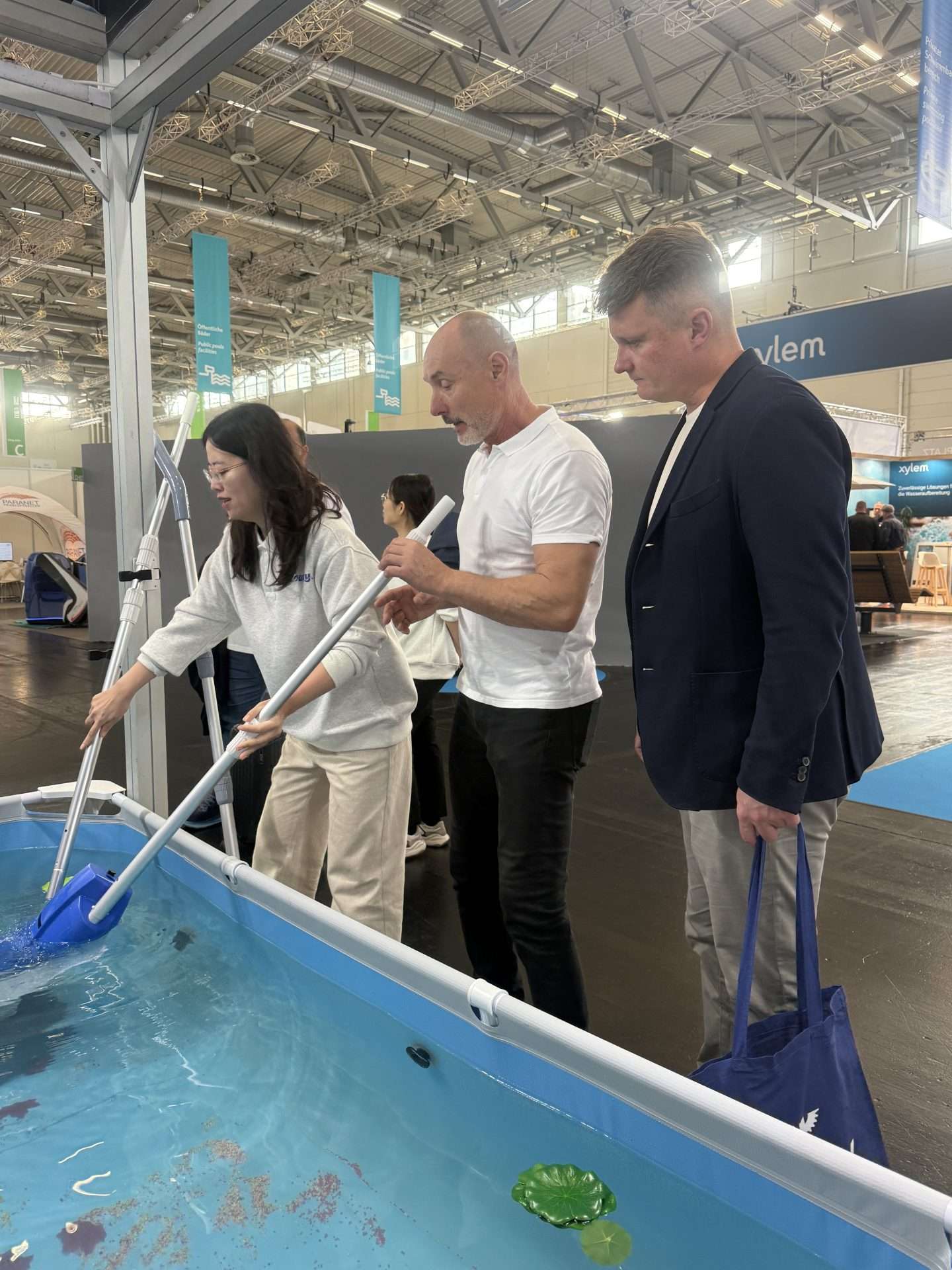
Governments around the world have introduced a series of supporting policies to promote the development of the environmental protection and energy-saving industries, which have created a good policy environment for the pool cleaner market. For example, some countries provide tax incentives, R&D subsidies, and other support to enterprises producing environmentally friendly and energy-saving pool cleaners, encouraging enterprises to increase investment in technological innovation and promote product upgrading. At the same time, manufacturers and distributors also actively carry out market promotion activities to improve consumers’ awareness and acceptance of pool cleaners through a combination of online and offline methods. Online, they use social media, e-commerce platforms, etc. for product promotion and sales; offline, they display products at pool equipment exhibitions, home building materials markets, and other places to allow consumers to personally experience the convenience and efficiency of pool cleaners. These policy supports and market promotion activities have jointly promoted the prosperity and development of the pool cleaner market.
Future Development Trends
In addition, the market competition is becoming increasingly fierce, with many brands and product models, leading to a gradually saturated market. When facing a wide range of products, consumers are likely to fall into a decision-making dilemma and experience decision fatigue. This not only increases the difficulty for consumers to choose suitable products but also makes the competition between brands more intense. Enterprises need to invest more marketing costs to attract consumers, further compressing profit margins. At the same time, competition from traditional cleaning methods still exists. Although traditional cleaning methods such as manual cleaning and using nets are less efficient, they are still widely used in some small pools or scenarios with low cleaning requirements due to their simple operation and low cost. This convenience makes some consumers more inclined to choose traditional cleaning methods, thus affecting the market promotion of pool cleaners.
(I) Integration of Smart Features
High initial cost is an important factor hindering some consumers from buying pool cleaners. Although there are products of different price ranges available on the market, high-quality and fully functional pool cleaners, especially robotic pool cleaners with advanced technology, are often priced high. For some consumers with limited budgets, especially in underdeveloped regions, the high price makes them hesitate to buy pool cleaners, which limits the popularity of the market to a certain extent. For example, a high-end robotic pool cleaner with intelligent navigation and remote control functions may cost thousands of US dollars, which is a considerable expense for ordinary families.
Maintenance and repair costs are also key factors affecting consumers’ purchasing decisions. As a kind of mechanical equipment, pool cleaners will inevitably have wear and tear, failures, and other problems during long-term use, requiring regular maintenance and occasional repairs. These maintenance and repair costs, including replacement of parts, maintenance labor costs, etc., will increase the total cost of ownership for consumers. Moreover, the after-sales service network of some brands of pool cleaners is not perfect, and the maintenance cycle is long, which also brings inconvenience to consumers and makes them have concerns about long-term investment in pool cleaners. For example, for some imported brands of pool cleaners, it may be difficult to find professional maintenance personnel and suitable parts in some regions of China, resulting in high maintenance costs and long time consumption.
Technical limitations cannot be ignored either. Currently, not all pool cleaners are suitable for all types or shapes of pools. Some pools with complex designs, such as irregular shapes, special slopes, or large depth changes, may make it difficult for some models of pool cleaners to perform at their best. During the cleaning process, these cleaners may not be able to effectively cover certain areas, or may experience stalling, collision, and other problems during movement, resulting in poor cleaning effects and customer dissatisfaction. For example, some pool cleaners using simple navigation technology are prone to cleaning dead ends when facing pools with complex shapes, which cannot meet users’ needs for comprehensive cleaning.
With the rapid development of technology, pool cleaners are making great strides towards the integration of smart features. In the future, app connectivity will become a standard feature of pool cleaners. Users can easily achieve remote control of the pool cleaner through a mobile app. Whether in any corner of the house or on the go, they can start and pause the cleaner anytime and anywhere, and flexibly adjust the cleaning time and area. For example, when a user plans to swim in the evening, they can start the cleaner through the app in the afternoon to ensure clear water for swimming.
Voice control function will also bring a more convenient operation experience to users. With the help of intelligent voice assistants, users do not need to operate manually. They only need to issue simple voice commands, such as “Start cleaning the pool” and “Pause cleaning”, and the pool cleaner can quickly respond and execute the corresponding tasks. This function is especially suitable for users who are busy with their hands or inconvenient to operate mobile phones, further improving the convenience of use.
The addition of scheduling functions allows pool cleaners to automatically start cleaning according to the time and frequency preset by users. Users can set daily, weekly, or monthly cleaning plans according to factors such as the frequency of pool use and water quality. The cleaner will automatically turn on on time to keep the pool clean at all times. This intelligent scheduling function not only saves users’ time and energy but also ensures consistent hygiene standards for the pool.
(II) Sustainable Development
With the continuous improvement of global environmental awareness, sustainable development has become an important development direction of the pool cleaner industry. In the future, manufacturers will pay more attention to the development of high-efficiency pool cleaners. By adopting advanced energy-saving technologies and high-efficiency motors, they will reduce energy consumption during the operation of the cleaner and reduce the burden on the environment. Some new types of pool cleaners may be equipped with intelligent energy management systems, which automatically adjust power according to the actual cleaning needs of the pool, minimizing energy consumption while ensuring cleaning effects.
The use of environmentally friendly materials to manufacture pool cleaners is also an irresistible trend. From the body shell to internal components, recyclable and degradable environmentally friendly materials will be adopted to reduce the consumption of natural resources and environmental pollution. These environmentally friendly materials not only conform to the concept of sustainable development but also improve product safety, creating a healthier use environment for users.
The diversification of consumer needs has prompted the pool cleaner industry to develop towards personalization and customization. In the future, manufacturers will provide customizable cleaning programs and functions according to consumers’ specific needs. For pools with irregular shapes, users can customize cleaning programs to make the cleaner better adapt to the unique shape of the pool and achieve comprehensive and efficient cleaning. For different water quality conditions and dirt types, consumers can choose corresponding cleaning modes and function combinations, such as strengthening algae cleaning and focusing on descaling.
Some high-end pool cleaners may also provide personalized appearance design and color options, making the cleaner not only a practical tool but also a decoration around the pool, integrating with the overall home style. This development trend of personalization and customization can better meet consumers’ personalized needs and improve users’ satisfaction and loyalty to the product.
(IV) User-Friendly Design
(III) Personalization and Customization
Easy-to-maintain design is also indispensable. Future pool cleaners will have a more reasonable structural design to facilitate users’ daily maintenance. For example, the adoption of a modular design concept allows users to easily disassemble and replace faulty components, reducing maintenance costs and difficulty. At the same time, detailed maintenance guides and online tutorials will be provided to help users better understand and master maintenance skills.
To attract more consumers, pool cleaners will pay more attention to user-friendly design in the future. Simplifying the control system is the key to making the operation simpler and easier to understand, so that even first-time users can quickly get started. By reducing complex operation steps and buttons and adopting intuitive icons and indicator lights, users can easily understand the working status and operation methods of the cleaner.
The design of an intuitive interface is also crucial. Whether it is the operation interface of the mobile app or the control panel of the cleaner itself, it will follow the principle of simplicity and intuition, allowing users to find the required functions and information at a glance. The use of large fonts and high-contrast displays facilitates the use of users of different age groups.
(V) Expansion of Emerging Markets
Conclusion
The international pool cleaner industry is in a stage of rapid development, with continuous expansion of market size, continuous emergence of technological innovations, and increasingly fierce brand competition. With the improvement of people’s living standards and the pursuit of healthy and leisure life, the market demand for pool cleaners will continue to grow. However, the development of the industry also faces some challenges, such as high costs, technical limitations, and intensified market competition. To address these challenges, enterprises need to continuously increase R&D investment, improve product performance and quality, reduce costs, expand market channels, and strengthen brand building and after-sales service. At the same time, governments and industry associations should also play an active role in strengthening policy support and industry norms to promote the healthy and sustainable development of the pool cleaner industry.
Manufacturers should actively expand into emerging markets and adjust product strategies and marketing plans according to local market needs and consumption habits. In view of the fact that consumers in emerging markets are more price-sensitive, products with moderate prices and reliable performance should be launched. Strengthen local brand promotion and after-sales service network construction to improve brand awareness and user satisfaction. Establish cooperative relationships with local distributors and retailers to expand sales channels and increase product market coverage. With the continuous development of emerging markets, the pool cleaner market will usher in a broader development space.
With the development of the global economy, the number of pools in emerging economies has shown a rapid growth trend. This has brought huge development opportunities to the pool cleaner market. In regions such as Asia and South America, with the rise of the middle class and the improvement of living standards, more and more families have begun to have private pools, and commercial pool facilities are constantly improving. The demand for pool cleaners in these emerging markets is increasing day by day.
 English
  French
  Italian
  German
  Spanish
  Polish
  Danish
  Indonesian
  Swedish
  Russian
  Turkish
  Portuguese