
As modern pool owners look for smarter, faster, and cleaner solutions to maintain their swimming pools, pool cleaning robots are quickly becoming one of the most popular choices on the market. Over the past few years, robotic pool cleaners and surface skimmers have evolved significantly, offering better performance, stronger filtration, and more automated cleaning capabilities. But why exactly are these products gaining so much traction? And will we eventually see a single device that combines both a pool robot and a surface skimmer into one?
This article explores the reasons behind the growing adoption of robotic pool cleaners, examines whether these devices could merge with surface skimmers in the future, and provides insight into what’s next for the pool-cleaning industry.
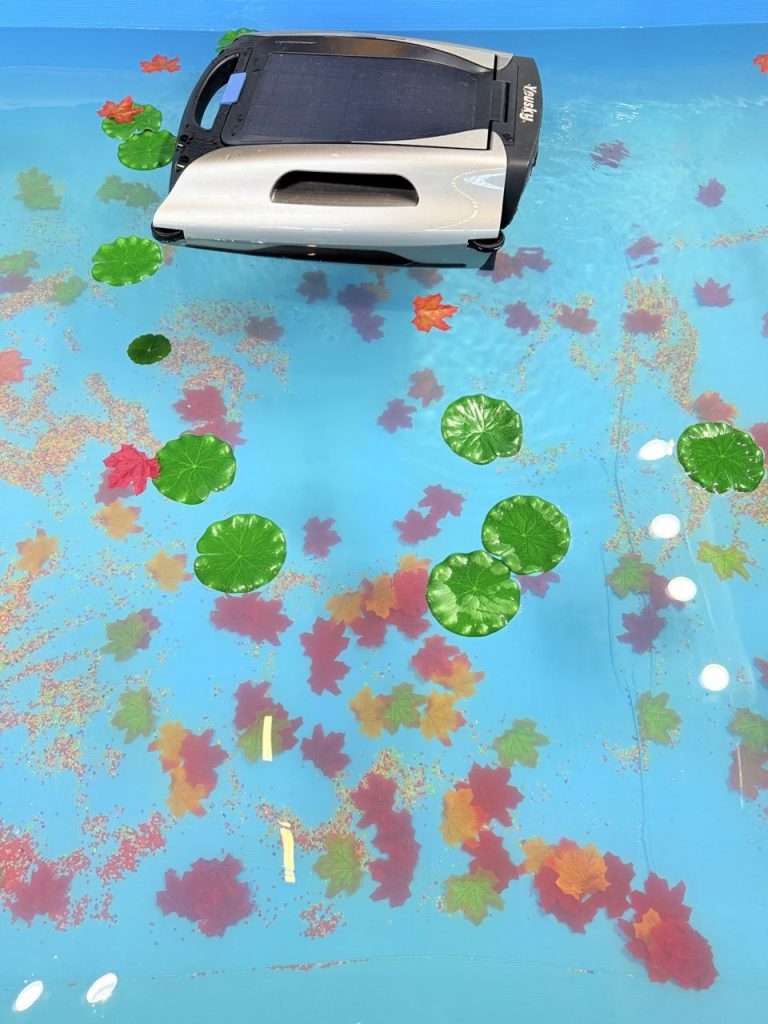
Why Pool Cleaning Robots Are Gaining Popularity
1.1 Increased Demand for Automation
Modern consumers value convenience more than ever. Whether it’s smart home devices or automated garden tools, people want products that reduce manual labor. Pool maintenance, traditionally a time-consuming chore, fits perfectly into this trend.
Pool robots take over tasks such as:
- Scrubbing the pool floor and walls
- Vacuuming dirt, sand, and debris
- Filtering fine particles
- Operating autonomously without supervision
For busy homeowners, saving hours each week on pool cleaning is a major benefit.
1.2 Improved Cleaning Efficiency
Compared to traditional manual cleaning tools, roboti̇k havuz temi̇zleyi̇ci̇leri̇ deliver a consistently higher standard of cleaning. They follow optimized navigation paths, use powerful motors, and integrate advanced brushing systems that can remove stubborn algae and dirt.
Many premium robots now include:
- Smart scanning and route planning
- Wall-climbing capability
- Multi-layer filtration systems
- Energy-efficient motors
These advancements allow robots to clean faster and more thoroughly than a human using a pole vacuum or simple hand tools.
1.3 Lower Long-Term Costs
Although the initial price of a pool robot is higher than simple manual tools, the product can help users save money in the long run:
- Reduced need for professional cleaning services
- Less water wasted compared to backwashing traditional pool pumps
- Enhanced energy efficiency
- Longer intervals between major pool maintenance
For many households, the long-term savings justify the upfront investment.
1.4 Rising Expectations for Quality of Life
Across Europe, North America, and Australia, pool owners increasingly expect solutions that “just work.” A clean pool improves daily comfort, reduces health concerns, and enhances the user experience during the swimming season.
In regions with short summers—such as Germany or the northern United States—people want to maximize every day of warm weather. A robotic cleaner ensures the pool is ready for use anytime, without manual effort.
Could Pool Robots and Surface Skimmers Become One Device?
Surface skimmers and pool robots serve different but complementary functions:
- Pool robots focus on cleaning the pool floor and walls.
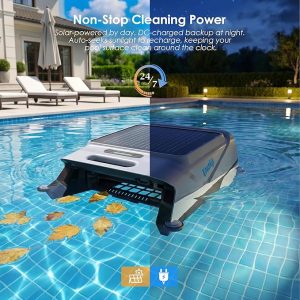
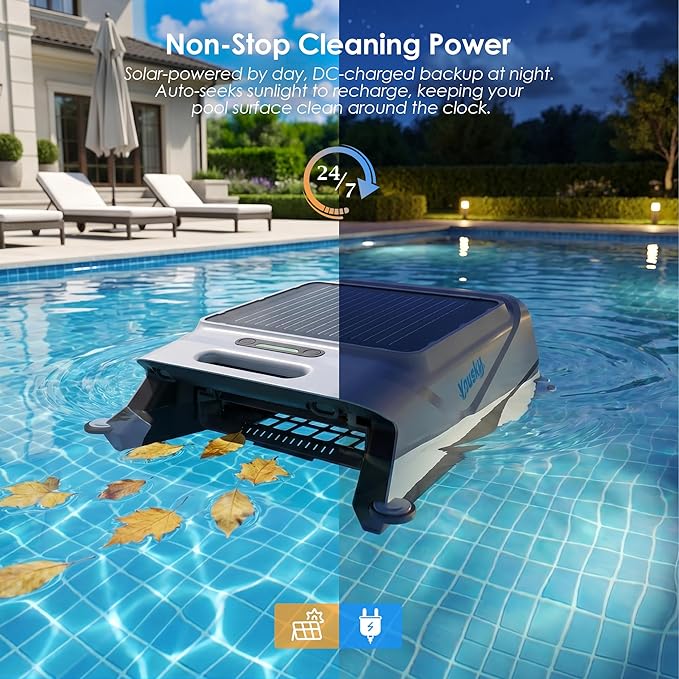
- Skimmer machines (surface cleaners) remove leaves, insects, pollen, and floating debris before they sink.
2.1 Technical Challenges of Combining Both
Merging these two devices into one unified machine is technically possible, but it involves several engineering challenges:
- Weight and buoyancy conflicts A pool robot needs to sink and adhere to surfaces, while a skimmer must float. Creating a hybrid that can transition between both states is complex.
- Power and battery limitations A machine that performs multiple functions would require stronger motors and larger batteries, increasing cost and weight.
- Navigation difficulty Underwater navigation and surface navigation use different sensors and structures. Combining them would require a significant leap in design.
2.2 Early Signs of Integration
Although a true “hybrid” cleaner is not yet mainstream, some manufacturers are experimenting with:
- Robots with partial surface-cleaning capability
- Floating skimmers that include micro-filtration
- Multi-mode cleaning devices with expanded features
This suggests the industry is slowly moving toward integrated solutions, but a fully merged product that performs both roles equally well still requires more technological development.
Future Trends in Pool Cleaning Technology
3.1 Smarter Sensors and AI Navigation
Next-generation robots are expected to use AI-based scanning, real-time mapping, and adaptive route planning. This will allow them to:
- Identify dirty areas automatically
- Avoid obstacles more effectively
- Optimize cleaning cycles based on pool shape and usage
3.2 Higher Energy Efficiency
As sustainability becomes more important, future devices will likely feature:
- Ultra-low-energy motors
- Improved battery density
- Solar-assisted charging for surface devices
3.3 Modular or Multi-Function Products
Although a complete robot-plus-skimmer hybrid may not be mainstream soon, the development trend clearly points toward:
- Multi-stage filtration
- Expandable attachments
- Systems that combine floor, wall, and surface cleaning in one ecosystem
This may not be a single device, but rather a coordinated cleaning system that works together seamlessly.
3.4 Growing Popularity in Europe
In markets such as Germany, France, and Italy, the demand for automated pool cleaning is growing due to:
- Shorter swimming seasons (people need fast, efficient cleaning)
- Higher labor costs (making automation more attractive)
- Increased interest in smart home technology
As robotic products become more affordable and more capable, adoption is expected to accelerate.
Sonuç
Pool cleaning robots are becoming increasingly popular because they offer convenience, efficiency, and long-term cost savings. While surface skimmers and pool robots currently serve different purposes, technological advancements may eventually bring these two solutions closer together—either through hybrid devices or coordinated cleaning ecosystems.
As consumer expectations continue to grow and automation becomes a standard part of modern living, the future of pool cleaning clearly points toward smarter, more integrated, and more efficient robotic solutions.
-300x300.jpg)

.jpg)

 Turkish
  English
  French
  Italian
  German
  Spanish
  Polish
  Danish
  Indonesian
  Swedish
  Russian
  Portuguese